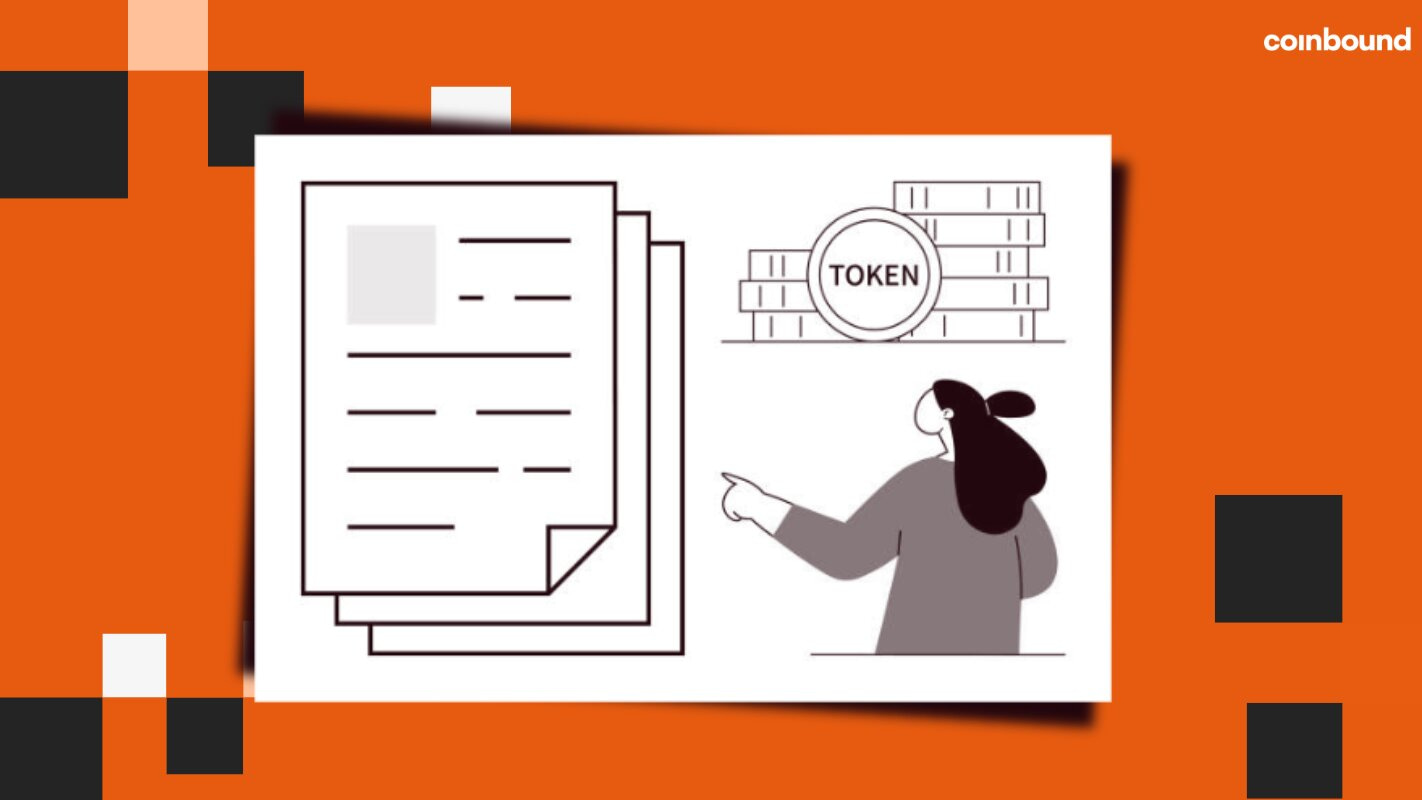
Tokenomics design sits at the core of every successful Web3 project because it defines how value moves through the ecosystem. A strong token model shapes incentives in a way that rewards the right behaviors, encourages long term participation and aligns users, builders, and investors around shared goals. When tokenomics are well-designed, they can accelerate adoption, stabilize demand and help a project grow through multiple market cycles. On the other hand, a weak model can quickly do the opposite. Poor incentive structures often lead to short term farming, constant sell pressure and declining engagement. In many cases, flawed tokenomics have caused promising protocols to lose momentum or fail entirely, even when the underlying product was solid.
For web3 founders and marketers, tokenomics design is far more than an economic framework built for whitepapers and crypto investors. It acts as a growth engine, influencing how users discover, use, and stay committed to a Web3 product. It also serves as a powerful community tool, shaping contributor behavior, governance participation and long term loyalty. Beyond the ecosystem itself, tokenomics send a clear signal to the broader market about a project’s vision, maturity and commitment to sustainability. This guide breaks down the core components, guiding principles, proven best practices, and common mistakes that matter most when designing a tokenomics model built to last.
What Is Tokenomics Design
Tokenomics design is the process of structuring a token’s economic mechanics so that the self-interested behavior of individual participants — users, investors, developers, validators — naturally produces outcomes that benefit the protocol as a whole.
It’s fundamentally an incentive engineering problem. You’re deciding who gets tokens, when, under what conditions, and what they can do with them. Those decisions shape how people interact with your protocol, how value accumulates or bleeds out over time, and whether the ecosystem can sustain itself without continuous artificial intervention. The underlying goal is to align participant behavior with the long-term health of the protocol, which is straightforward to state and genuinely difficult to execute.
In practice, this requires balancing multiple forces. You need to attract blockchain users, reward contributors, fund development and manage market dynamics, all at the same time. Good tokenomics design sits at the intersection of behavioral economics, game theory, and product strategy. It has to be grounded in how your specific user base actually behaves, not how you want them to behave.
Most tokenomics failures aren’t design failures at launch. They’re the result of models that couldn’t adapt when user behavior or market conditions diverged from initial assumptions. The crypto projects that hold up are the ones that monitor on-chain data and treat the economic model as something to be refined, not just deployed.
Core Components of Tokenomics Design
Token Supply Model
Supply defines how many tokens exist and how they enter circulation. Common approaches include fixed supply, capped inflation, or dynamic mint and burn mechanisms.
A fixed supply can create scarcity, but it often increases volatility. Inflationary models can support ongoing rewards, but they must stay predictable. Many projects combine approaches to balance stability and incentives.
Clear supply logic helps investors understand future dilution and helps users trust the system.
Token Distribution
Distribution determines who owns the token and when. Typical allocations include community rewards, team, investors, treasury and ecosystem funds.
Fair distribution matters more than many teams expect. Over allocation to insiders can hurt credibility and limit organic growth. Long vesting schedules and transparent unlocks often signal commitment to long term value.
Token Utility
Utility answers one key question. Why does the token need to exist?
Strong utility goes beyond speculation. Tokens can enable access, reduce fees, secure the network or coordinate governance. The best designs tie utility directly to core product usage.
If users can ignore the token and still get full value, the model likely needs work.
Incentive Mechanisms
Incentives guide behavior. They reward users for actions that grow the ecosystem, such as staking, providing liquidity or contributing content.
Short term rewards can boost activity, but they often fade. Sustainable incentives reward long term participation and discourage extractive behavior.
Design incentives with clear goals and measurable outcomes.
Governance Design
Governance defines how decisions get made. Tokens often grant voting power, but voting alone does not guarantee decentralization.
Effective governance models balance inclusivity with efficiency. Delegation, quorum thresholds and staged decision processes help prevent voter fatigue and manipulation.
Also see: How to Launch an ICO: Step‑by‑Step Guide
Key Principles for Sustainable Tokenomics Design
Align Incentives With Long Term Value
Every reward should push the ecosystem toward durable growth. Avoid designs that reward behavior which drains value, even if it looks good on early metrics.
Ask a simple question. Does this incentive still make sense two years from now.
Keep It Simple
Complex tokenomics confuse users and slow adoption. Clear rules attract more participants and reduce friction.
If you cannot explain the model in a few minutes, many users will not engage.
Design for Real Demand
Speculation alone does not create sustainability. Tokens should have demand rooted in real usage, not just emissions or hype cycles.
Real demand supports price stability and healthier market dynamics.
Plan for Market Cycles
Crypto markets move fast and often swing hard. Tokenomics should survive both bull and bear conditions.
Stress test assumptions under low volume, falling prices, and reduced user growth.
Best Practices for Web3 Founders and Marketers
Start With the Product
Tokenomics should support the product, not replace it. A strong product with weak tokenomics can recover. Weak products rarely survive on token design alone.
Align utility and incentives directly with user actions inside the product.
Use Vesting and Unlocks Strategically
Gradual unlocks reduce shock to the market and align contributors with long term goals. Communicate schedules clearly and early.
Transparency builds trust with both users and investors.
Measure and Iterate
Track on chain data and user behavior. Watch retention, staking duration, and sell pressure.
Tokenomics design does not end at launch. Iteration based on data often separates lasting projects from short lived ones.
Integrate Marketing Early
Marketing and tokenomics should work together. Clear messaging around utility, emissions, and value creation helps users understand why the token matters.
Coinbound often helps projects align token strategy with go to market execution, as outlined in the guide to crypto go to market planning
Learn From Proven Models
Study systems that have survived multiple cycles. Ethereum, MakerDAO, and Curve offer valuable lessons on incentives and governance.
For foundational learning, Binance Academy provides a clear overview of tokenomics concepts
Ethereum’s documentation also explains how incentives support network security.
Common Tokenomics Design Mistakes
Over Emphasizing Early Price
Designing purely for short-term price appreciation usually means aggressive emissions schedules or thin utility — the kind of setup that attracts mercenary capital and exits fast. Once that trust breaks, it rarely comes back.
Ignoring User Psychology
Token users respond to clarity, fairness, and predictability. Sudden parameter changes, opaque vesting mechanics, or poorly communicated supply events don’t just confuse people, they trigger sell pressure and community backlash that’s hard to recover from.
Also see: Retention Strategies for Token Holders and Active Users
Copying Without Context
Borrowing a token model without adapting it to your product is one of the most common ways projects get this wrong. A ve(3,3) structure that works for a DEX creates velocity and retention problems in a gaming or social context where user behavior looks completely different.
Always design within your specific use case.
Launching Without a Clear Narrative
Even well-constructed tokenomics can underperform if users can’t articulate why the token exists or how it connects to the ecosystem. The economic design and the brand story need to reinforce each other — Coinbound’s crypto branding work consistently shows that projects that nail both outperform those that treat them as separate workstreams.
Also see: Web3 Branding Strategy Guide: Pillars & Roadmap
Tokenomics Design and Long Term Growth
Tokenomics design touches every stage of a Web3 project — from how launch mechanics shape early community behavior to how supply schedules affect protocol resilience at scale. Founders who get this right build systems where token value and product value move together rather than diverging over time.
If you want expert support aligning tokenomics with growth and adoption, Coinbound works with leading Web3 projects to connect economic design with real market traction.
Conclusion
Tokenomics design is one of the few decisions that compounds over time — for better or worse. When built with intention, it aligns incentives, supports healthy growth, and creates real reasons for users to participate beyond speculation. When rushed or poorly structured, it produces the kind of structural damage that’s hard to unwind: misaligned incentives, mercenary liquidity, and communities that lose faith in the project’s fundamentals.
The Web3/blockchain projects that get this right treat tokenomics as an ongoing system that needs to reflect how their product and community actually behave, and they revisit it as both evolve.
Coinbound’s tokenomics consulting works with Web3 projects to design and pressure-test economic models before they go to market, and to refine them as conditions change. If you’re building a token economy that needs to hold up past the launch window, get in touch.
Frequently Asked Questions about Tokenomics Design
What is tokenomics design in crypto?
Tokenomics design in crypto refers to how a project structures its native token to coordinate behavior across a decentralized network of participants who don’t know or trust each other. That means deciding the total supply and issuance schedule, how tokens are allocated across teams, investors, and community, what the token actually does within the protocol and how the system discourages extractive behavior like mercenary capital or governance attacks.
Why is tokenomics design important for founders?
Strong tokenomics align user behavior with long term value. Poor design can cause sell pressure, low engagement, and loss of trust, even if the product is strong.
How do Web3 marketers use tokenomics design?
Marketers use tokenomics mostly as a narrative tool. Tokenomics design gives marketers the raw material for the token’s story. Distribution schedules, supply mechanics, staking yields, governance rights are the proof points that answer the question every investor and user is actually asking, which is “why does this token have value and why should I hold it.” A marketer who understands the tokenomics can translate mechanism design into positioning. They can explain why a deflationary supply matters for this specific use case, or why the vesting schedule signals team alignment rather than just being a lockup.
It also shapes crypto community strategy. Tokenomics determines who the early holders are, what their incentives are, and how long they’re likely to stick around. Marketers use that to decide where to focus — which communities to seed, what the retention narrative is post-TGE, how to frame staking or governance participation as something beyond yield farming.
What is the biggest mistake in tokenomics design?
Confusing token price with token value.
Most design failures trace back to this. Teams structure everything — emissions, vesting, incentives — around generating buy pressure and suppressing sell pressure in the short term. The token looks healthy by price metrics while the underlying mechanics are extractive or circular. Users are being paid in tokens to use a product they wouldn’t otherwise use, liquidity is rented rather than earned, and the whole system depends on continuous new capital entering to sustain it.
When that stops, it doesn’t just correct — it collapses, because there was no real demand underneath the price.
Can tokenomics design change after launch?
Yes. Many successful projects adjust emissions, incentives, or governance over time. Changes should remain transparent and data driven to maintain trust.
Also See: Crypto Web Design Examples