
Of the hundreds of types of digital marketing, influencer marketing is one of the fastest-growing and most controversial.
In fact, 63% of marketers plan to increase their influencer marketing budget for the upcoming year and this study revealed a return on investment of $6 for every $1 spent advertising through influencers.
Before you go ahead and gear up to spread the word about your cryptocurrency brand through the industry’s most influential people it’s important to be prepared.
We’ve broken down some of the most commonly asked questions regarding crypto influencer marketing so that you can start your viral campaign on the right foot.
What Is Crypto Influencer Marketing?
Crypto influencer marketing is a branch of Web3 marketing where crypto projects collaborate with influential creators (KOLs) on platforms like X, YouTube, TikTok, Telegram, and Discord to promote tokens, products, or brands to their engaged audiences.
Crypto influencer campaigns can deliver higher conversion rates and brand recall than many traditional ads because audiences perceive endorsements as more authentic and community-native. Global Banking & Finance reports that.
Also see: Top Crypto KOLs to Follow
How does influencer marketing compare to other strategies?
When we stack crypto influencer marketing up against other forms of crypto marketing, it’s like comparing a personalized playlist to just hitting shuffle on your music app. Both have their place, but one offers a tailored experience that resonates.
On average influencer marketing is more expensive than other types of paid media and this is largely due to the "trust factor" influencers bring to the table.
There’s certainly a big difference between seeing a banner ad on a blockchain news site and hearing it from a person you respect and follow. Trust costs more.
Furthermore, studies show that influencer campaigns deliver about 11× higher ROI than standard digital ads
This study shows that 89% of marketers say ROI is comparable to or better than other channels.
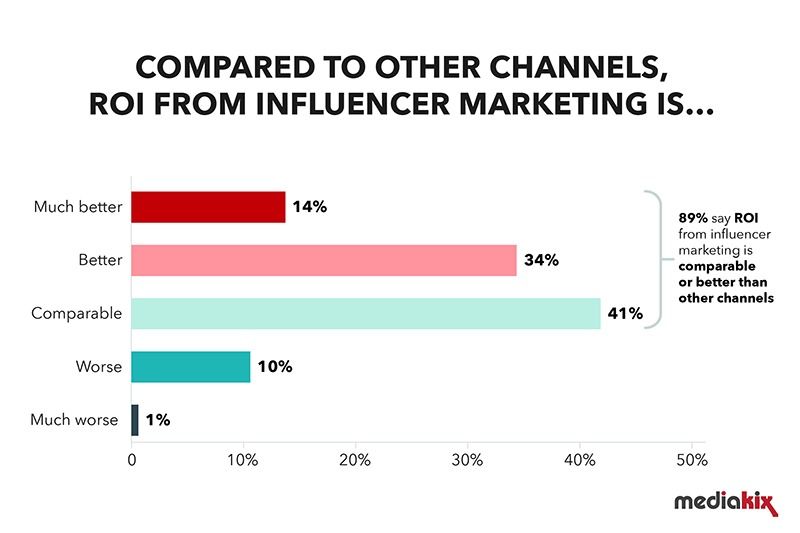
Compared to more traditional or broad marketing channels, crypto influencer marketing has some unique benefits for Web3 brands.
Community Engagement vs. Passive Viewing
Standard marketing tactics often rely on passive consumption. You see an ad pop up while scrolling through a website or a banner while reading an article. It’s there, you might glance at it, but there’s no engagement. Crypto influencers bring the conversation to life.
They’re not just talking at the audience; they’re sparking dialogues, answering questions, and building a community around genuine interests and shared passions.
Authenticity vs. Ad Speak
Let’s face it, traditional ads can sometimes feel a bit... ad-like. You know there’s a pitch coming. Influencers, though, have this superpower to weave in their personal stories and experiences with crypto products or platforms in a way that feels natural and authentic.
Their followers are there for their opinions and insights, so when they talk about a crypto brand, it comes across as more genuine and less salesy.
Targeted Reach vs. General Audience
With traditional marketing, targeting can be hit or miss. You’re aiming for a specific demographic, sure, but the message is broadcasted in a one-size-fits-all manner. Influencer marketing, by nature, is niche.
Influencers have carved out their own specific space in the crypto world, attracting followers who are deeply interested in what they have to say about blockchain, cryptocurrencies, and everything in between.
This means your message hits the right ears, not just any ears.
Cost Effectiveness vs. High Investment with Varied Returns
Traditional digital marketing can be pricey, with costs accumulating for ad space, PPC campaigns, and SEO optimization without guaranteed engagement. Influencer marketing can be more cost-effective, especially with micro or niche influencers.
They offer a more budget-friendly way to tap into dedicated communities, potentially providing a better ROI thanks to their engaged and loyal followers.
To sum it up, crypto influencer marketing brings a personal, engaging, and authentic touch to the table that other forms of marketing can struggle to match. It’s about leveraging those personal connections and trust built over time to introduce, educate, and persuade in a way that feels more natural and less like a hard sell. So, while each marketing approach has its merits, influencer marketing holds a unique position in the crypto space, offering a direct line to engaged and interested audiences.
Why Businesses Should Care About Crypto Influencer Marketing
Crypto marketing relies heavily on trust and community. Paid ads are limited, brand messaging is often viewed with skepticism, and most people learn about new projects through creators they already follow. Crypto influencer marketing matters because those creators sit close to the conversations where decisions are actually made.
Influencers explain complex products in simple terms, demo how tools work, and point people toward concrete actions such as downloading wallets, minting NFTs, staking, or trying a new protocol. Their audiences tend to be active participants rather than passive scrollers, which gives their recommendations real weight.
Why businesses should pay attention:
- influencers act as a primary trust layer in crypto
- they speak directly to engaged, niche communities
- they make technical products understandable
- impact often shows up in real transactions, not just impressions
Influencers already shape how people talk about chains, tokens, apps, and projects. Paying attention to that ecosystem means staying present where crypto users actually are.
Top Crypto Influencer Marketing Strategies That Work in 2026
Influencer marketing in crypto is most effective when it’s treated as a structured program, not a single post. The strongest results come from clear education, audience alignment, and steady storytelling across channels. Crypto audiences look for people who can explain how something works, why it matters, and what to do next. The strategies below focus on building that kind of practical, credible presence through creators who already participate in the conversations your users follow.
Prioritize education over promotion
Educational content performs better in crypto because people are trying to understand what something does before they decide to use it. Influencers who teach instead of pitch create space for trust to form. The goal is to help the audience understand the problem, why it matters, how the solution works, and what real users actually do with it. Walkthroughs, explainers, tutorials, and real scenarios typically outperform hype or generic brand mentions. Lead with learning, then introduce the product naturally once the context is clear.
Match influencers to audience intent, not follower count
The best results come from audience fit, not the biggest number on a profile. What matters most is whether the creator’s followers care about the topic and actively engage with it. Look for alignment between what the influencer normally talks about and what the project offers. High engagement quality, relevant comments, and focused niche conversations usually signal the right match. A smaller but well-aligned audience will outperform a large, unfocused following.
Use influencers to tell a consistent narrative over time
Trust builds through repetition and familiarity. A single post rarely changes behavior, but a steady narrative does. When influencers return to the same project over time (updates, demos, feature highlights, progress milestones) the brand becomes part of the audience’s mental map of the space. Multi-post or long-term collaborations help creators tell a story that unfolds, rather than dropping one isolated mention that quickly disappears from feeds.
The effectiveness of launching coordinated campaigns across platforms
Coordinated influencer activity increases visibility and message retention. When audiences encounter similar ideas across multiple channels, the message feels present and relevant rather than random. Timing matters: aligned posting schedules, shared themes, and platform-specific content styles (threads, short videos, long-form explainers) reinforce each other. This multiplies reach while keeping the story consistent, instead of scattering disconnected mentions.
Align influencer campaigns with key moments
Timing strongly affects performance. Campaigns tied to meaningful events such as token launches, exchange listings, feature releases, roadmap milestones, or major updates feel naturally relevant. Influencers can frame the moment, explain what’s new, and guide audiences on what it changes for them. Planning ahead so content lands at the right moment helps turn attention into measurable action.
Leveraging micro-influencers for authentic engagement
Micro-influencers often sit closest to real communities. Their audiences are smaller but highly specific, and interaction levels tend to be stronger. These creators answer questions, debate ideas, and maintain genuine relationships with followers. Because of this, their recommendations feel personal rather than distant. They are also cost-effective, which allows brands to work with multiple niche voices instead of relying on one expensive creator with a broad but less focused audience.
The collaborations should highlight immediate next steps (CTAs)
Audiences respond better when the next step is simple and clear. Calls to action should feel like a natural continuation of the content rather than pressure to buy or speculate. Examples include trying a feature, joining a Discord, testing a wallet, reading documentation, or signing up for early access. Clear direction improves conversions and makes performance measurable, without pushing people into anything they’re not ready for.
Track the right metrics for measuring impact and optimization
Meaningful measurement goes beyond impressions. The useful signals include engagement quality, comments that show real interest, traffic to specific pages, signups, on-chain actions, and returning users. Tracking what people actually do after seeing the content helps refine partner selection, messaging, and format choices. Numbers are valuable when they inform the next iteration, not just when they look large in a report.
Build long-term relationships with strategic partnerships
Long-term influencer relationships create familiarity and credibility. When the same creator engages with a Web3 brand repeatedly, the audience starts viewing the project as part of that creator’s regular world rather than a paid interruption. Over time, this improves performance, content quality, and mutual understanding between brand and influencer. Depth of relationship usually beats one-off transactional posts.
Use transparency to build credibility and trust
Transparency is non-negotiable in crypto. Clear sponsorship labels, realistic claims, and honest discussion of risks protect both the brand and the creator. Audiences respond well to openness and are quick to dismiss anything that feels hidden or exaggerated. Being explicit about the partnership strengthens credibility and builds the kind of trust that sustains long-term engagement rather than short-term speculation.
How Crypto Influencers Are Typically Categorized
Crypto influencers are commonly grouped by the size of their audience. While follower count isn’t the only thing that matters, these categories are useful for planning budgets, estimating reach, and understanding typical strengths and limitations at each level. In practice, smaller creators tend to have tighter communities and higher engagement, while larger ones offer broad awareness and faster distribution.
Here’s a simple overview of how crypto influencers are usually categorized:
| Category | Approx. audience size | Strengths | Common tradeoffs |
|---|---|---|---|
| Nano | up to ~10,000 followers | very close community, high authenticity, niche topics | limited reach |
| Micro | 10,000–100,000 followers | strong engagement, targeted audiences, cost-effective | less mass visibility |
| Mid-tier | 100,000–500,000 followers | balance of reach and relevance, broader topic coverage | higher fees, mixed audience intent |
| Macro | 500,000–1 million followers | large reach, fast awareness, strong social proof | engagement often lower relative to size |
| Mega | 1 million+ followers | mass visibility, mainstream recognition | very broad audiences, high cost, lower intimacy |
These categories aren’t rigid, and quality varies widely within each band. The most effective campaigns usually mix tiers: micro and nano creators for credibility and conversation, with occasional mid-tier or macro influencers to scale reach when needed.
Top Platforms for Crypto Influencer Marketing
X/Twitter
X, as digital marketing guru Gary Vaynerchuck calls it, is the "water cooler" of the internet.
It’s where casual conversation and idea-sharing is easy. Unsurprisingly, the cryptocurrency community has found it an especially convenient way to communicate.
If you’re curious to learn more about crypto Twitter check out our article on the top crypto Twitter influencers like CryptoWendyO.
YouTube
YouTube has also found its way into the daily routine of millions of cryptocurrency enthusiasts worldwide.
Popular accounts like BitBoy, Ivan on Tech, CryptoBud, and CryptoZombie attract thousands of views on their videos discussing current crypto news, reviewing blockchain organizations, and more.
It’s not surprising that brands have found a great deal of success in reaching a highly-targeted audience through crypto YouTubers.
Also see: Biggest YouTube Crypto Influencers & Channels To Follow in 2026
TikTok
TikTok has become a major discovery channel for crypto, especially for short how-to content and trend watching. Quick explainer videos, market sentiment clips, and simple walkthroughs perform well here because they fit the fast, scrollable format. Many users are new or curious investors, which makes TikTok a strong top- and mid-funnel platform for education and brand awareness. Projects that lend themselves to visual demos (wallets, apps, games, NFTs) tend to see the strongest results.
Instagram’s role in crypto influencer marketing is driven by visual storytelling. Carousels, short Reels, and infographics are commonly used to break down complex ideas such as token utilities, security tips, or project roadmaps into digestible pieces. It’s also a useful platform for community building through behind-the-scenes posts, event highlights, and creator-led Q&As. While less trading-focused than X, Instagram is effective for brand presence and ongoing audience engagement.
Also see: 25+ Top Crypto Instagram Accounts You Should Be Following
Podcasts
Podcasts are popular among users who want deeper conversations about crypto projects, technology, and market direction. Long-form audio allows influencers to explore narratives in detail, interview founders, and discuss use cases without the constraints of short-form content. Crypto podcast audiences tend to be highly engaged and intent-driven, making this format strong for thought leadership, complex products, and higher-trust decision making.
Also see: Web3 Thought Leadership Strategies for Brands and Founders
How to Vet Influencers for Crypto Marketing
Choosing the right influencers matters as much as the campaign idea itself. Vetting protects your brand from fake followers, low-quality promotion, and reputational risk, while helping you find creators who actually move their audiences to act. The goal is to confirm that the influencer is credible, relevant, and capable of producing outcomes aligned with your goals.
Start with content quality and alignment. Review recent posts to see whether the creator regularly covers topics related to your category (DeFi, NFTs, gaming, infrastructure, security, etc.). Look for clear explanations, thoughtful takes, and consistency rather than random paid promotions.
Evaluate the audience. Check engagement quality: real comments, discussions, questions, and shares. Sudden follower spikes, repetitive bot-like comments, or very low engagement relative to follower count are red flags.
Check reputation. Search for prior controversies, undisclosed promotions, “pump and dump” accusations, or community distrust. Positive signals include AMAs, quality threads, tutorials, balanced opinions, and transparent disclosures.
Review past brand collaborations. Look at how they integrated sponsored content, whether it felt authentic, and how the audience responded. Avoid creators who post back-to-back promos with little value added.
Verify authenticity with basic analytics. Where possible, review:
- engagement rate and comment quality
- audience geography and language fit
- platform mix (X, YouTube, TikTok, podcasts, etc.)
- consistency of posting cadence
Finally, assess risk tolerance and compliance. Ensure they use disclaimers when needed, avoid unrealistic claims, and are comfortable with transparent sponsorship labeling.
How Much Does the Crypto Influencer Marketing Cost?
Short answer: it depends.
In terms of the total budget, many brands now embed influencer spend within their overall digital marketing plans rather than treating it as ad-hoc. Reports indicate brands generally allocate about 15–25% of their total digital marketing budget to influencer campaigns; a range that can guide crypto spend planning too.
For a crypto brand planning an annual program:
- Small projects might start at $50K–$150K annual influencer spend if pairing multiple micro and mid-tier partners.
- Larger campaigns tied to multiple launches, educational series, and cross-platform coordination often exceed $150K+ annually, especially when combined with community incentives and analytics tools.
- Many brands budget $10–$30 CPM for YouTube influencer campaigns, with finance/crypto often landing higher when engagement is strong.
Being a top Web3 marketing agency allows Coinbound to work with crypto influencers and KOLs across all sizes and as such offers influencer and KOL marketing services at many different price points.
Is it possible to pay for performance and not upfront?
Yes!
Affiliate marketing is a massive piece of marketing through influencers and cryptocurrency brands have found tremendous success.
In fact, some of the influencers that work with Coinbound have reported earnings in the multi-million dollar range from Web3 affiliate marketing programs alone.
It’s worth knowing, however, that most agencies will require upfront payment.
Are the results guaranteed?
Unfortunately no, but then again, when are they?
Influencer marketing is one of the more volatile forms of brand growth.
We advocate spending small amounts across many influencers to see which content creator’s audience performs the best for your product or service. Marketing is all about experimenting.
When working with a crypto influencer marketing agency be sure to ask about their results from past campaigns.
An agency that has done its homework should have access to a plethora of previous social media campaign results and be able to give you a semi-accurate picture of the results you can expect.
Crypto Influencer Marketing Challenges and How to Overcome Them
Influencer marketing is an extremely useful tool but there are certainly some key points to keep in mind before your next (or first) dabble into the thought leader marketing sphere.
Your copy needs to be on point
Influencer marketing is still relatively new and audiences that aren’t familiar with it can feel it’s done distastefully if the messaging isn’t organic sounding.
This is one of the main reasons we advocate for brands to give the influencers they hire freedom to promote the brand in a way that feels natural for them.
Influencers can be difficult to work with
This is an unavoidable and unfortunate part of the influencer business. But don’t get frustrated when an major social media persona doesn’t answer your message.
With the accessibility provided by being able to Direct Message nearly anyone, you have to realize they are getting pitches like yours every day.
Here are some tips to getting your message read and responded to:
- Be upfront that you are willing to pay. Influencers are often asked to do things for free which they are not super eager to do, regardless of how great your product is. They know that, if you are reaching out to them, it’s because you find value in their audience and they are expecting to be properly compensated.
- Mention how your brand would provide value to their audience.
- Explain why their audience is aligned with that of your brand.
The difficulty of influencers to work with is often a function of the size of their audience. While you might think the bigger the audiences following is the more difficult they are to work with, this isn’t always the case.
There is a certain threshold of influencer at which content creators become professionally aware of the value they are able to provide and build out systems
Be aware of the rules to stay legally compliant
In recent years the FTC has made it clear they are looking more closely at influencer marketing. The main point highlighted is disclosure.
Be sure any influencer you are working with is aware they are expected to disclose that a post is sponsored.
Top Crypto Influencer Marketing Agencies
Partnering with a specialized crypto influencer marketing agency can speed up results, reduce risk, and save a lot of internal trial-and-error. Agencies already have relationships with vetted creators, understand platform nuances, and know how to structure campaigns that lead to measurable outcomes rather than one-off shoutouts.
If you want to compare options, check out our top crypto influencer marketing agencies list, which breaks down leading players in the space.
Working with an agency typically helps with:
- identifying the right influencer–audience fit
- campaign strategy and narrative development
- negotiation, briefing, and compliance
- cross-platform coordination
- performance tracking and optimization
Agencies like Coinbound and others in our list have dedicated experience in Web3, DeFi, NFTs, and exchanges, which makes execution smoother and reduces the learning curve for your team. Coinbound has a network that includes all of the major crypto and Web3 influencers and, as such, is a great agency to work with if you want to grow your crypto company with influencers on Twitter, YouTube, TikTok, and more.
Conclusion
Wrapping up our deep dive into the world of crypto influencer marketing, it’s clear this space is a gold mine for those ready to think outside the box. Influencers have the magic touch when it comes to talking to their peeps, stirring up the crypto pot, and making things happen. They’re not just about the hype; they’re the bridge connecting your brand to the crypto-curious and the crypto-serious alike.